Bhutan’s Bold Transformation With Gelephu Airport
For decades, Bhutan has carefully controlled how the outside world experiences it. Now, with the development of a new international airport and a visionary city project, the Himalayan kingdom may be on the verge of redefining travel within its borders.
Earlier this year, on a warm morning in the southern lowland town of Gelephu—situated near the Indian border—Bhutan’s King, Jigme Khesar Namgyel Wangchuck, stood in a clearing carved out of dense jungle. Joined by around 12,000 volunteers, he personally participated in cutting palm trees and clearing brush to make way for a project that could dramatically alter how travellers reach Bhutan. This effort marked the beginning of the Gelephu Airport, a development that is expected to reshape access to this remote nation.
Table of Contents
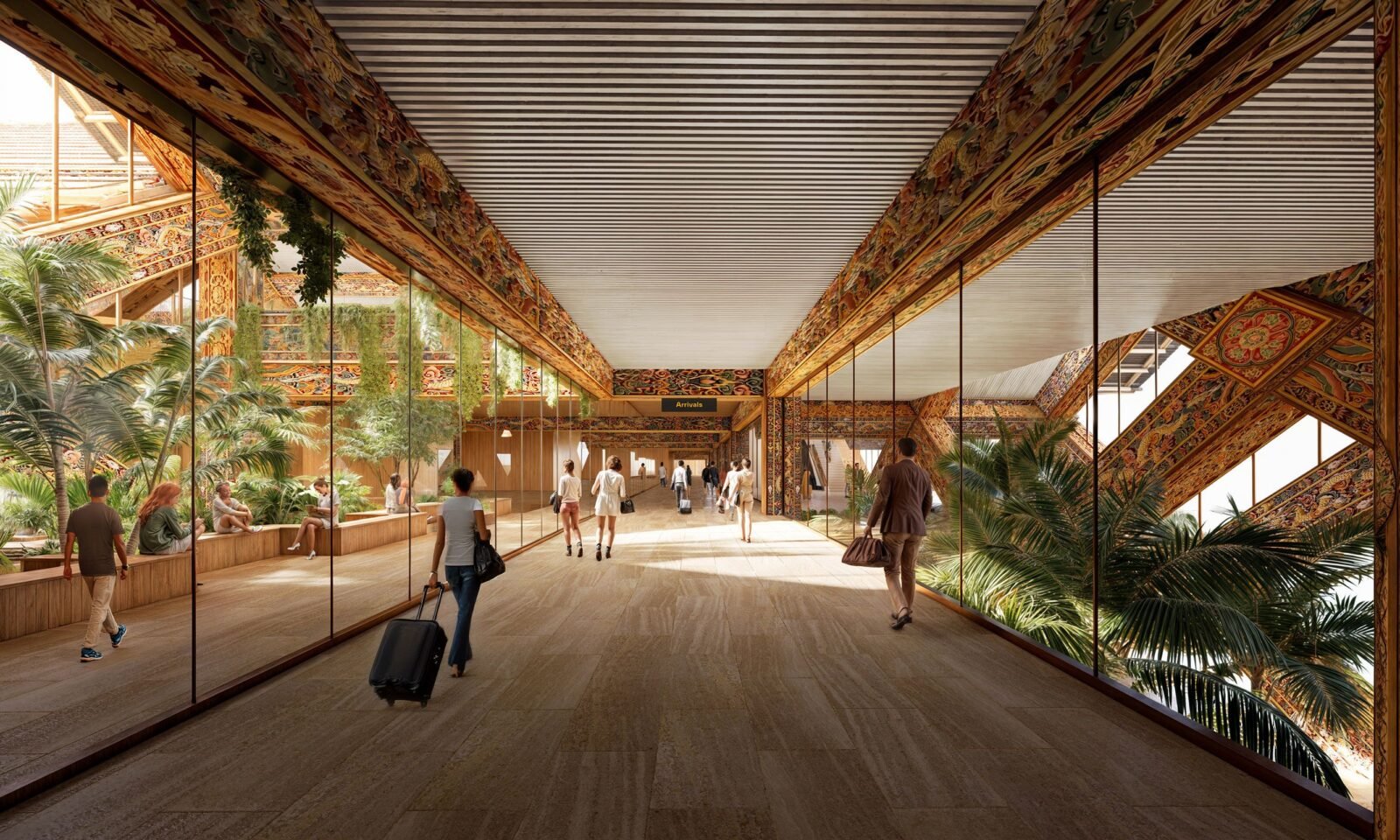
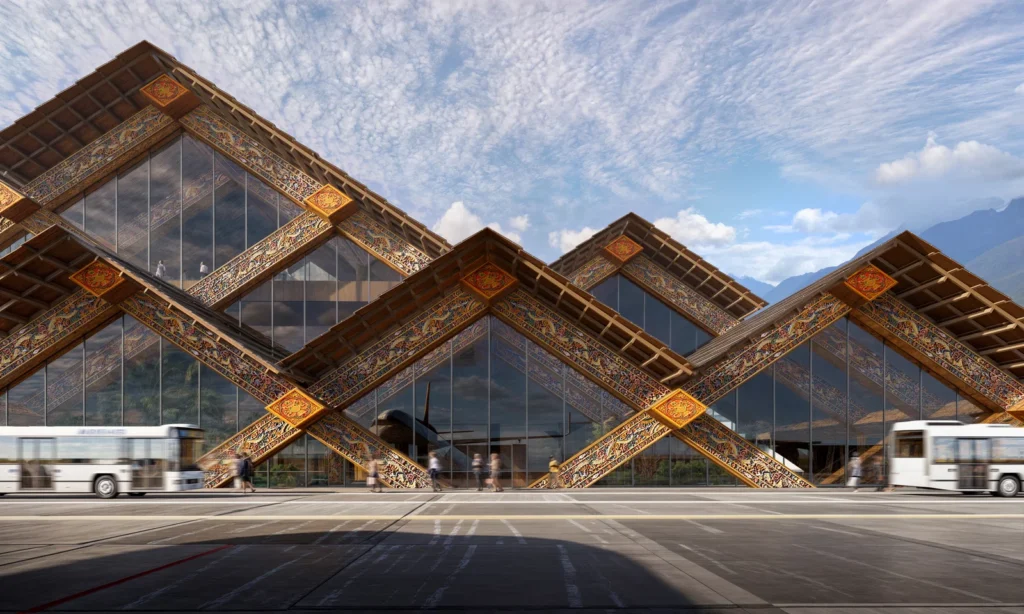
Scheduled for completion in 2029, the Gelephu International Airport has already received international recognition, winning the “Future Project of the Year” award at the 2025 World Architecture Festival. The terminal will feature an intricate lattice design crafted from Bhutanese timber, engineered to naturally regulate humidity while reflecting the surrounding mountainous landscape. Beyond functionality, the airport will incorporate spaces dedicated to wellness, including areas for gong baths, yoga sessions and meditation. However, its primary purpose goes beyond aesthetics—it is designed to handle up to 123 flights daily and act as the main gateway to the ambitious Gelephu Mindfulness City (GMC), a project intended to transform Bhutan’s accessibility and global appeal.
An elusive and exclusive destination
Nestled within the towering peaks of the Himalayas, Bhutan has long been one of the world’s most secluded nations. For centuries, it maintained a largely isolationist stance, opening its doors to international tourism only in 1974. Even then, it adopted a strict “High Value, Low Volume” tourism policy aimed at preserving its cultural identity and preventing overtourism.
Prior to the pandemic, visitors were required to book their trips through licensed Bhutanese tour operators and pay a Minimum Daily Package Rate ranging from US$200 to US$250 (£148–£185). This fee included accommodation, meals, transport, guides and a sustainable development contribution. Since 2022, this system has been replaced with a $100 (£74) Sustainable Development Fee per adult per night, while other travel costs are arranged separately. Despite the introduction of a new airport, Bhutan remains committed to maintaining its carefully managed tourism model.
Because of these restrictions, Bhutan has long maintained a sense of exclusivity, with the journey itself contributing to its mystique.
Currently, Paro serves as Bhutan’s only international airport. Located in western Bhutan, it is serviced by just two airlines—Drukair and Bhutan Airlines—and typically handles around eight flights per day. For travellers coming from Europe or North America, reaching Bhutan often involves multiple days of transit, with stopovers in cities like Bangkok, Kathmandu or Delhi. The journey is not inexpensive either, with round-trip flights from connecting hubs often exceeding £890 ($1,200).
Landing in Paro is itself a remarkable experience. Situated at an altitude of 2,243 metres and surrounded by mountains rising up to 5,500 metres, it is widely regarded as one of the most challenging airports in the world. Due to its location in a narrow, winding valley, pilots must execute several sharp turns during landing and takeoff, relying entirely on visual navigation without radar assistance. Fewer than 50 pilots are certified to land at Paro, and in 2025, the airport recorded just 88,546 visitors.
Most travellers who arrive in Bhutan follow a traditional route, visiting destinations such as Thimphu, Punakha Valley, Phobjikha Valley and Bumthang—regions known for their stunning landscapes and luxury accommodations. However, Bhutan’s southern regions, rich in biodiversity, have remained largely unexplored by tourists.
The Gelephu Airport aims to change that. It will provide easier access to the country’s southern frontier, attracting both travellers and spiritual seekers. Additionally, it will serve Gelephu Mindfulness City, a special administrative region envisioned by King Wangchuck to accommodate up to one million residents—both Bhutanese and international—by 2060. Plans are also underway to connect Gelephu to Assam, India, through a 69-kilometre railway line, which will mark Bhutan’s first-ever railway network.
A new vision for Bhutan
The concept of developing Gelephu into a major economic and travel hub was first proposed by King Wangchuck more than a decade ago. However, the Covid-19 pandemic accelerated its importance. During the pandemic, Bhutan effectively shut itself off from the world until September 2022, severely impacting its tourism industry and intensifying an already growing trend of youth migration abroad.
Through the creation of Gelephu Mindfulness City, Bhutan aims to establish a self-sustaining urban centre that blends economic opportunity with its core values of sustainability and spirituality. Known globally for prioritising Gross National Happiness over economic output, Bhutan hopes this project will not only generate employment and attract investment but also encourage travellers to explore beyond the traditional western circuit.
Dr Lotay Tshering, Bhutan’s former prime minister and now Governor of GMC, emphasised the importance of connectivity, stating that while the project will create jobs and investment opportunities, it requires a steady flow of incoming flights and visitors to succeed. Once completed, Gelephu Airport is expected to become Bhutan’s primary aviation hub.
Tourism officials also envision Gelephu as a convenient stopover destination for international travellers. Instead of transiting through major hubs like Hong Kong or Bangkok, visitors could choose to pass through Gelephu and spend time exploring its offerings—whether that involves jungle safaris or spiritual retreats.
Exploring Bhutan’s untamed south
The Bhutan that travellers will encounter in Gelephu differs significantly from the iconic imagery of cliffside monasteries and fluttering prayer flags. The southern region is lush, subtropical and vibrant, characterised by cardamom and orange plantations, river-fed farmlands, palm-lined landscapes and natural hot springs that have been used for generations.
Gelephu is flanked by two national parks, including Royal Manas National Park—the oldest in the country. This biodiversity hotspot is home to elephants, tigers, rhinos, clouded leopards, golden langurs and over 360 bird species, including the critically endangered white-bellied heron, half of whose global population resides in Bhutan.
Southern Bhutan remains one of the planet’s most untouched wilderness areas, serving as a sanctuary for endangered wildlife and offering an experience unlike any other.
In keeping with Bhutan’s values, the development of tourism infrastructure in Gelephu places a strong emphasis on spirituality. Buddhist masters have been invited to design retreat centres and temples within GMC. Plans also include the construction of a dzong—a traditional fortress combining monastic and administrative functions—with accommodation for guests and spaces for cultural performances and religious study.
Adventure tourism is also expected to grow. The Lotus-Born Trail, a newly announced 168-kilometre trekking route set to open in 2028, will connect Bhutan’s southern lowlands with its spiritual heartland. This eight-day journey begins in forested regions inhabited by golden langurs and rhinos and ascends nearly 3,500 metres to alpine ridges, tracing the path of Guru Rinpoche, who introduced Buddhism to Bhutan.
Beyond trekking, visitors will find activities such as rafting, birdwatching and exploring a newly developed tiger trail within Royal Manas National Park. Accommodation options will differ from the luxury lodges found elsewhere in Bhutan, focusing instead on homestays and eco-camps. In 2024, Bhutan also introduced its first high-end fly-fishing lodge in the Manas region.
Cultural experiences are being enhanced as well. Gelephu’s Old Town is undergoing revitalisation, including a culinary initiative celebrating the region’s diverse heritage. Visitors can expect dishes like thali platters and dal from the Lhotshampa community, alongside Bhutan’s signature ema datshi—a spicy chilli and cheese stew. The area will also feature murals created by the artist collective VAST and a Heritage Village showcasing Bhutan’s 13 traditional arts and crafts, including basket weaving and thangka painting.
Historically, southern Bhutan has been difficult to access. Challenges such as malaria, heavy monsoons and the presence of wild animals kept much of the population concentrated in higher regions. Even during the 1860s, British forces failed to establish control over the area after a prolonged conflict known as the Duar War. As a result, the region remained largely untouched and wild.
Today, that wilderness is considered one of Bhutan’s greatest assets—a rare expanse of raw jungle where nature exists largely undisturbed.
As construction progresses in Gelephu, both the new airport and the ambitious city project continue to take shape. When completed, they are expected not only to transform how visitors experience Bhutan but also to influence the nation’s future direction.
King Wangchuck has expressed hope that this initiative will allow Bhutan to innovate while staying true to its values, ultimately creating lasting benefits for generations to come.
FAQ
1. When will Gelephu Airport open?
The airport is expected to be completed and operational by 2029.
2. What is Gelephu Mindfulness City?
It is a large-scale development project aimed at creating a sustainable, spiritual and economically vibrant city in southern Bhutan.
3. Will Bhutan become easier to visit?
Yes, the new airport will improve accessibility, but Bhutan will continue to maintain controlled tourism through its Sustainable Development Fee.
4. Why is Paro Airport considered dangerous?
Paro Airport is located in a narrow valley surrounded by high mountains, requiring pilots to perform complex visual landings without radar assistance.
5. What makes southern Bhutan unique for travellers?
Southern Bhutan offers lush subtropical landscapes, rich biodiversity, wildlife safaris, and cultural experiences that differ from the more commonly visited northern regions.
6. What is the Sustainable Development Fee in Bhutan?
It is a $100 per night fee charged to tourists to support Bhutan’s environmental and cultural preservation efforts.







What's Your Reaction?