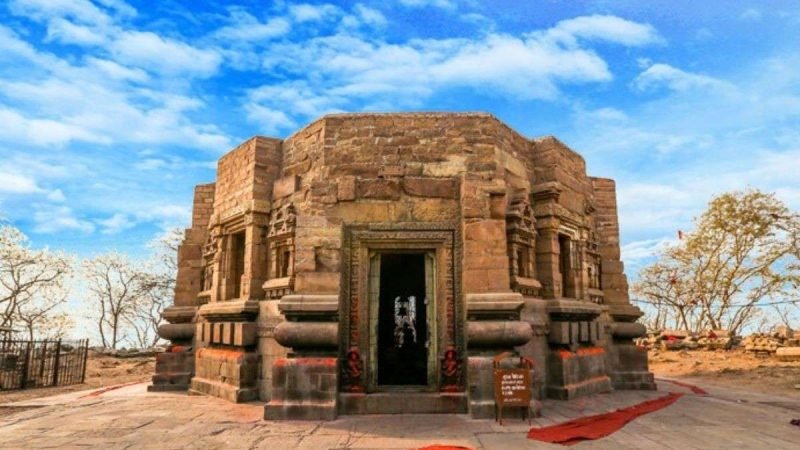
Perched atop the Mundeshwari Hills in Kaimur district, Bihar, the Mundeshwari Temple is considered the oldest functional Hindu temple in the world. Dedicated to Goddess Mundeshwari (Durga) and Lord Shiva, the temple has been a center of faith and ritual worship for nearly two millennia, with continuous prayers being offered since 108 AD. Its unique octagonal architecture, rich carvings, Tantric associations, and religious significance make it a rare treasure of India’s spiritual landscape.
History of Mundeshwari Temple
The temple’s origins trace back to the Kushan period, with inscriptions dating to 108 AD, making it one of the earliest stone-built temples in India. The Archaeological Survey of India (ASI) has confirmed that it is among the oldest surviving temples still in use.
During the Gupta period (4th–6th century CE), the temple became a center for Shaiva and Shakta worship, combining devotion to Shiva and Shakti. Later, under the Pala dynasty, Tantric practices flourished here. Despite multiple foreign invasions, destruction of parts of the temple, and natural calamities, its sanctity was preserved, and worship never ceased — a fact that sets it apart from most ancient shrines.
Legends and Ancient Stories
The temple is steeped in mythology:
- The Slayer of Demon Chand
It is believed that the demon Chand terrorized the region, and Goddess Durga, in her fierce form Mundeshwari Devi, appeared and killed him. The temple was built to commemorate this victory. - Unity of Shiva and Shakti
The dual worship of a Shivalinga alongside Mundeshwari Devi’s idol represents the cosmic union of energy (Shakti) and consciousness (Shiva). This is rare in Hindu temples, where usually one presiding deity dominates. - The Immortal Flame of Worship
Oral traditions state that no matter how turbulent history became, the daily rituals and lamp-lighting never stopped, believed to be safeguarded by the goddess herself.
- 10 Tips to Impress a Girl Online: A Playful Approach

- Study Innovation Emerging Around Z-library Communities
- Belly Band for Back Pain During Pregnancy: How It Works and Why Moms Love It
- 2026 Hyundai Verna Facelift Spotted Testing — New Design, Dual Screens & Level 2 ADAS on the Way
- Yamaha Unveils Four New Models: XSR155, FZ-Rave, Aerox Electric & EC-06 — A New Era of Performance and Electrification
- 2026 Kia Seltos Global Debut Set for December 10 — Hybrid Power, New Design & Upgraded Features Revealed!






Architecture of Mundeshwari Temple
The temple is a masterpiece of early Nagara-style architecture with distinct features:
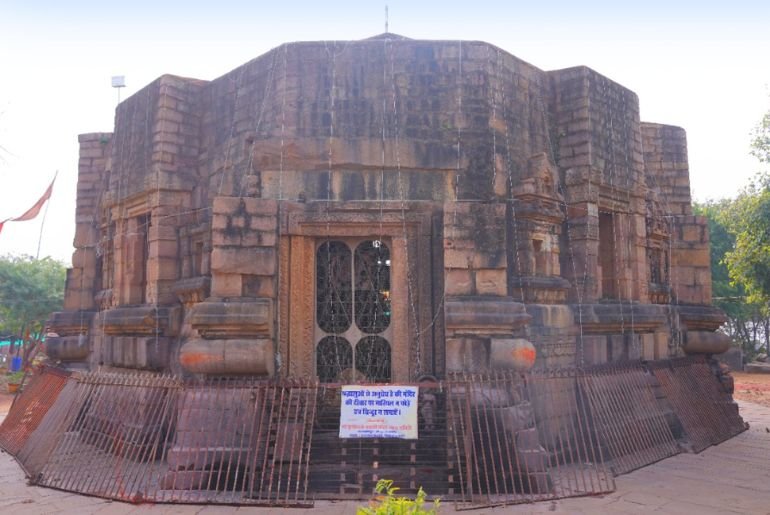
- Octagonal Layout: Unlike most temples with square or rectangular sanctums, Mundeshwari’s octagonal design symbolizes cosmic balance and is extremely rare.
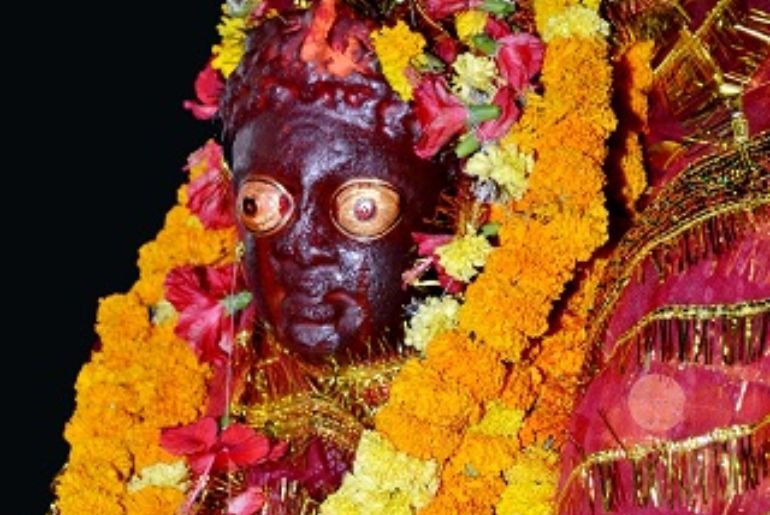
- Sanctum (Garbha Griha): Houses a Shivalinga, continuously bathed in water, and an idol of Mundeshwari Devi depicted with four faces (Chaturmukhi).
- Absence of Shikhara: The traditional tower (shikhara) is missing, possibly due to damage from invasions or earthquakes, but the temple’s sanctum remained intact.
- Intricate Carvings: The outer walls and pillars feature carvings of deities, celestial beings, floral motifs, and scenes from epics. These reflect both Gupta and Pala influences.
- Sculptures: Notable are depictions of Ganesha, Surya, and Vishnu, suggesting a syncretic approach to worship.
Religious and Cultural Importance
- Oldest Living Temple: Continuous worship for nearly 2,000 years makes it a unique living heritage site.
- Shakti Peetha Belief: Though not officially listed among the 51 Shakti Peethas, many devotees regard it as one, associating it with immense feminine power.
- Center of Tantric Practices: The temple was historically a hub for Tantric rituals, owing to its combined worship of Shiva and Shakti.
- Navratri Celebrations: The Chaitra Navratri Mela attracts lakhs of devotees. Traditional goat sacrifice has been replaced with symbolic offerings such as coconuts, pumpkins, and sugarcane.
- Local Faith: Villagers believe the goddess protects them from diseases, misfortunes, and evil forces.
How to Reach Mundeshwari Temple
The temple stands at a height of 608 feet on Mundeshwari Hills, overlooking scenic surroundings.
- By Air:
- Varanasi Airport (110 km) is the closest international airport.
- Patna Airport (200 km) is another option.
- By Train:
- Bhabua Road Railway Station (26 km) is the nearest, connected to Patna, Varanasi, and other major cities.
- By Road:
- Well connected by buses and taxis from Bhabua, Sasaram, and Varanasi.
- From the base, a motorable road leads close to the hill, followed by a short trek or climb to the temple.
Temple Timings and Rituals
- Opening Time: 4:00 AM
- Morning Aarti & Pooja: 4:00 AM – 12:00 Noon
- Evening Aarti: 6:00 PM – 8:00 PM
- Closing Time: Around 9:00 PM
Special ceremonies are performed during Navratri (March–April & September–October) with continuous chanting, bhajans, and mass participation.
Visitor Experience
- Spiritual Vibe: The serene hilltop setting enhances the divine aura of the temple.
- Festive Fairs: During Navratri, cultural programs, folk performances, and religious discourses are held.
- Archaeological Attraction: The temple draws historians, architects, and students keen to study its design and inscriptions.
- Scenic View: From the hilltop, one can view the lush plains of Bihar and Jharkhand.
Relevance in Religion and Spirituality
- Represents the fusion of Shaivism and Shaktism.
- A living testament to Hindu resilience against centuries of invasions.
- Seen as a Tantric power center, symbolizing the mysteries of energy and divinity.
- Believed to provide relief from curses, illnesses, and negative energies.
FAQs About Mundeshwari Temple
Q1. Why is Mundeshwari Temple important?
It is the world’s oldest functional Hindu temple, continuously active for over 1,900 years.
Q2. Which deities are worshipped here?
Goddess Mundeshwari (Durga) and Lord Shiva (Shivalinga).

Q3. What makes its architecture unique?
The octagonal structure, rare in Hindu temples, along with its carvings and absence of a shikhara.
Q4. Is animal sacrifice practiced?
No. Sacrifices have been replaced by symbolic offerings such as coconuts and pumpkins.
Q5. When is the best time to visit?
The temple is open year-round, but Chaitra Navratri (March–April) and Sharad Navratri (Sept–Oct) are the most vibrant.
Q6. Who manages the temple today?
The temple is under the protection of the Archaeological Survey of India (ASI), while daily rituals are conducted by temple priests.