1. Maruti Suzuki Swift Hybrid
One of India’s most beloved compact hatchbacks, the Swift, is gearing up for a hybrid makeover expected by mid-2025. The new variant will couple the familiar 1.2-litre Z-series petrol engine with a mild hybrid setup—likely offering more than 35 km/l efficiency. This eco-friendly version is projected to cost between ₹8–10 lakh, making it an affordable green option for urban commuters
2. Maruti Suzuki Fronx Facelift Hybrid
The Fronx facelift, expected to debut late 2025, will become the first model to feature Maruti’s in-house strong hybrid system. It will utilise a 1.2-litre petrol engine, electric motor, and small battery pack, likely delivering over 35 km per litre. Pricing is estimated around ₹8.5 lakh.
3. Toyota Urban Cruiser Hyryder (7-Seater Hybrid)
Toyota plans to expand the popular Urban Cruiser Hyryder into a 7-seater variant equipped with its strong hybrid powertrain. Launching probably by mid-2025, this family-friendly SUV is estimated to start around ₹17 lakh. It blends roomy interiors with frugal fuel economy—expected in the range of 22–23 km/l.
4. Maruti Suzuki Grand Vitara (7-Seater Hybrid)
Another highly anticipated three-row SUV from Maruti is the 7-seater Grand Vitara hybrid, set to launch in late 2025. Built on the Global C-platform, it will likely feature both mild and strong hybrid variants, targeting efficient performance (around ₹11–15 lakh) along with advanced safety features like ADAS.
5. Kia Seltos Hybrid
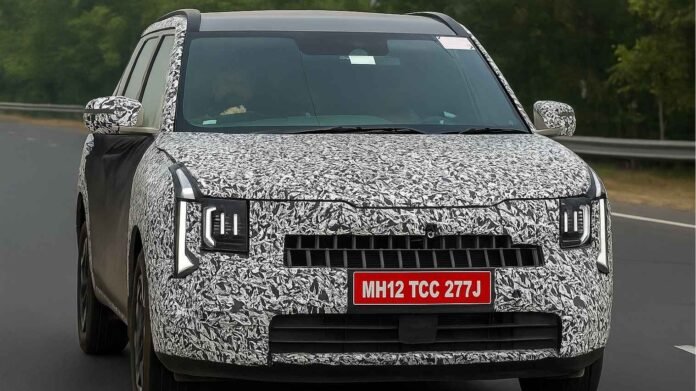
Kia is entering the hybrid segment with its Seltos Hybrid, aiming for a mid-2025 debut. Based on spy shots and industry speculation, it may pack a 1.5-litre turbo-petrol engine with electric assistance, offering around 20 km/l mileage in the ₹15–18 lakh bracket.
Comparison of 5 Upcoming Hybrid Cars in India 2025
| Model | Launch Timeline | Expected Price (₹) | Mileage (km/l) | Key Highlights |
|---|---|---|---|---|
| Maruti Suzuki Swift Hybrid | Mid-2025 | 8–10 lakh | ~35+ | Affordable hatchback, mild hybrid, high fuel efficiency |
| Maruti Suzuki Fronx Facelift Hybrid | Late-2025 | ~8.5 lakh | ~35+ | Strong hybrid setup, urban SUV styling |
| Toyota Urban Cruiser Hyryder (7-Seater) | Mid-2025 | ~17 lakh | 22–23 | Spacious SUV, strong hybrid, family-friendly |
| Maruti Suzuki Grand Vitara (7-Seater Hybrid) | Late-2025 | 11–15 lakh | ~20–23 | Mild/strong hybrid options, premium features |
| Kia Seltos Hybrid | Mid-2025 | 15–18 lakh | ~20 | Turbo-hybrid engine, modern SUV design |
Why This Hybrid Wave Matters in India
1. Fuel Efficiency & Cost Savings
India’s rising petrol costs push buyers toward more economical alternatives. Hybrids promise significant fuel savings—up to 35 km/l in city driving, as seen in models like the Swift and Fronx.
2. Strategic Transition to Electrification
Manufacturers view hybrids as a pragmatic bridge between ICE and full EVs, especially given infrastructure challenges.
3. Regulatory Alignment
Upcoming CAFE regulations are prompting automakers to pursue cleaner, multi-energy vehicles—hybrids fit neatly within these emerging norms. Moreover, companies like Mahindra are investing in hybrid-ready platforms, reflecting the sector-wide shift.
In summary, 2025 marks a pivotal year for hybrid mobility in India. From budget hatchbacks to spacious SUVs, manufacturers are rolling out models that blend efficiency, advanced tech, and practicality. Whether you’re seeking mileage savings, eco-friendliness, or family-ready SUVs, the upcoming hybrid lineup has something for every discerning Indian buyer.
FAQ – Hybrid Cars in India
Q1. What is a hybrid car?
A hybrid car uses both a traditional internal combustion engine (ICE) and an electric motor. The electric motor assists the petrol/diesel engine to improve fuel efficiency and reduce emissions.

Q2. Are hybrid cars better than petrol cars?
Yes, in terms of mileage and eco-friendliness, hybrids generally outperform regular petrol cars. They also emit less CO₂ and can be more cost-effective over time due to lower fuel consumption.
Q3. Do hybrid cars need to be charged?
Most hybrids in India are self-charging (regenerative braking charges the battery). Only plug-in hybrids (PHEVs) require charging from an external power source.
Q4. Are hybrid cars expensive to maintain?
Routine maintenance is similar to petrol cars. However, battery replacement can be costly if needed after several years, though most manufacturers offer long battery warranties.
Q5. Which is the most affordable upcoming hybrid car in India?
The Maruti Swift Hybrid, expected around ₹8–10 lakh, is likely to be the most budget-friendly hybrid launching in 2025.
Q6. Do hybrids qualify for government subsidies in India?
Currently, subsidies are offered mainly on electric vehicles under the FAME scheme. Hybrids generally don’t get direct subsidies, but they benefit from lower fuel costs.