Bandar Movie Review
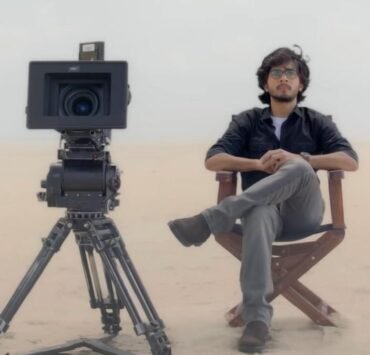
Nearly twenty years after Dev.D, Anurag Kashyap once again turns his gaze toward the anatomy of male entitlement. This time, however, he operates within the far more volatile and complicated landscape of the post-#MeToo era.
Kashyap’s filmmaking has always thrived in morally ambiguous territory, resisting simplistic judgments and easy conclusions. At first, Bandar appears poised to become his most ambitious exploration of that gray zone. Yet despite its promising setup, the film eventually loses momentum and settles into a less compelling rhythm.
As expected, Kashyap demonstrates remarkable skill in constructing an atmosphere charged with tension. Enhanced by Shivahari Verma’s evocative background score, the film creates an unsettling sense of dread while methodically cornering its protagonist. One of the strongest examples of this comes in the police station sequence, which draws much of its power from the darkly comic contrast between the protagonist’s overwhelming panic and the astonishing indifference of the authorities.
Jitendra Joshi, playing an unconcerned Mumbai police officer, injects the scene with a dry humor that makes it arguably the film’s most effective and tightly executed stretch.
Once Samar finds himself imprisoned in Taloja, the jail evolves beyond a simple physical setting. It becomes a layered symbol of social alienation, institutional dehumanization, and the gradual dismantling of patriarchal self-worth. The screenplay explores the uncertain boundaries of consent and the ways in which those ambiguities intersect with rigid class structures.
Many of the men accused of sexual assault within the prison believe themselves to be victims of circumstance, and they band together as a means of survival. To the system, however, distinctions cease to matter. The institution treats them all alike, reducing them to identical creatures trapped in the same enclosure. Morning devotional songs play ironically over scenes of humiliation and decay, reinforcing the loss of identity. Although the film was completed long before the cockroach became a nationally discussed symbol, Kashyap employs the insect as a political metaphor.
His suggestion is clear: once the safeguards that protect a citizen are stripped away, the state can reduce him to a condition no different from that of vermin.
Apart from Gayatri, the other significant women in Samar’s life—his sister Suhani, portrayed by Sanya Malhotra, and his current partner Khushi, played by Saba Azad—refuse to indulge him with sentimental sympathy. Neither has patience for his outdated worldview, and both choose either to move forward or to distance themselves from the toxicity surrounding him.
As a result, Samar becomes increasingly isolated, left to confront the consequences of his own emotional opacity. Even small indignities reinforce this condition. Denied the waist support belt that helps keep his spine aligned, he is forced to endure the crushing weight of the system with little support, both physically and psychologically.
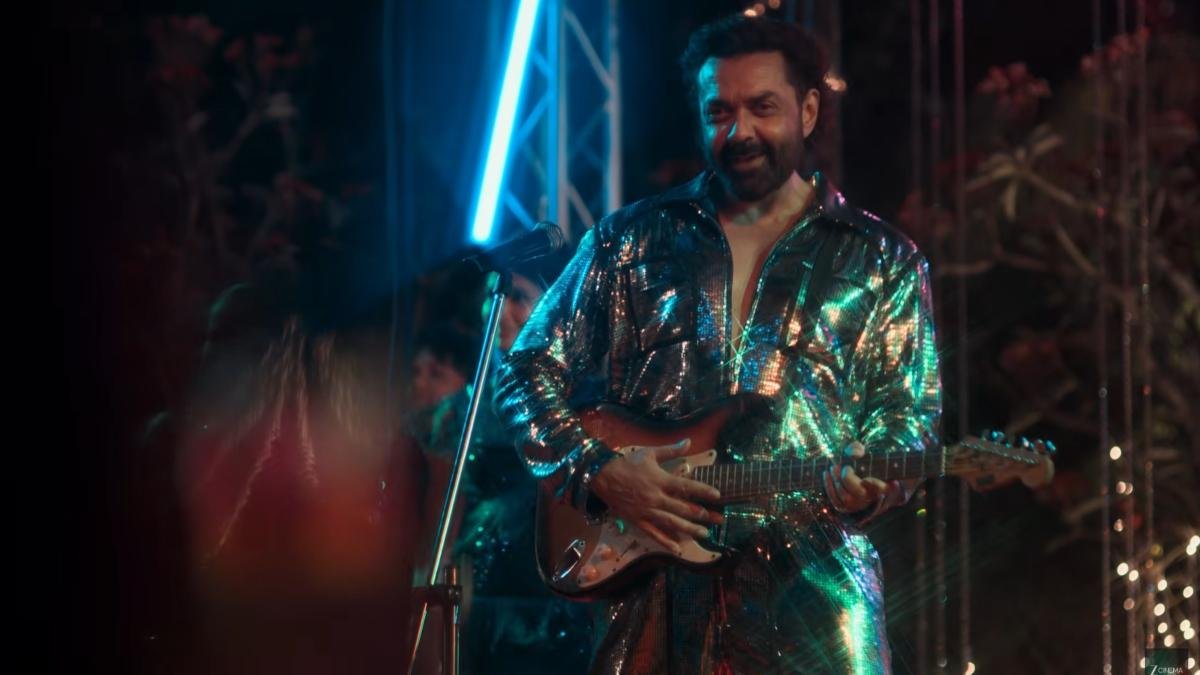
While Saba Azad and Sanya Malhotra inhabit their roles with convincing authenticity, Kashyap’s treatment of Bobby in Bandar recalls the way he strategically utilized John Abraham in No Smoking. Once again, he takes an actor known for a highly masculine, mainstream screen image and strips away that commercial persona, placing him inside a suffocating and psychologically demanding environment. One gets the sense that Kashyap may not even fully reveal his intentions to the actor.
He has often shown a tendency to cast performers whose limitations are well known, but rather than attempting to overcome those limitations, he incorporates them into the character itself. Consequently, although the circumstances surrounding Bobby’s character are entirely different, the actor relies on a familiar set of expressions and gestures: clenched-jaw anxiety, wide-eyed confusion, and visible helplessness. These are tools he has employed throughout much of his career.
For international audiences, Bobby’s performance in Bandar may function as an intriguing exercise in stripping glamour from a commercial star. For casual viewers, it may feel like a fascinating inversion of the dominant alpha-male energy he has recently projected in Bollywood. Yet for those familiar with both perspectives, the performance often appears emotionally flat, difficult to read, and frustratingly opaque. At times, it feels as though the intention is not to illuminate the character, but rather to emphasize that the actor himself remains a pawn in the director’s larger design.

More crucially, when the narrative reaches its final act in Bandar, Kashyap struggles to maintain control of the themes he has so carefully established. This is not entirely surprising given his history of setting up compelling ideas only to lose sight of them later. Here, the loss of focus may even be intentional, serving as a reflection of predatory men within the entertainment industry who believe they have been unfairly targeted or falsely accused by women they view as irrational or vindictive.
The larger problem emerges when the screenplay of Bandar proves unwilling or unable to answer the questions it raises. In such cases, moral ambiguity stops being a strength and begins to feel like a liability. The writers seem to possess a deeper understanding of Samar than they do of Gayatri.
Once the story pivots toward themes of prison survival and institutional decay, Bandar abandons much of its earlier psychological complexity. The nuanced exploration of individual motivations gives way to a broader examination of the treatment of undertrials within the Indian justice system. There is no denying the effectiveness of the prison environment itself. Production designer Prashant Bidkar and art director Vivek Kerkar create a setting whose overcrowding, hierarchy, and filth feel disturbingly authentic.
The realism is so vivid that it seizes the viewer’s attention immediately. Yet over time, this relentless emphasis on suffering begins to resemble a narrative shortcut, one designed less to deepen the story than to overwhelm the audience into submission.
Undoubtedly, the intention is to make Samar’s personal ordeal appear insignificant against the backdrop of a much larger and more indifferent system, thereby amplifying the tragedy and futility of his situation. Nevertheless, beneath the surface, the screenplay often feels as though it is channeling a specific cultural resentment. Running through the film is an unmistakable undercurrent—a plea from certain privileged men demanding recognition and sympathy, a collective voice insisting, “Look at us too.”