
Travel has changed dramatically over the past decade. What once required hours of research, dozens of browser tabs, handwritten notes, and spreadsheets can now be done in minutes with the help of artificial intelligence. The rise of the AI travel planner is transforming the global tourism industry by making trip planning smarter, faster, cheaper, and more personalized than ever before.
Table of Contents
Modern travelers no longer want generic vacation packages or rigid itineraries. They want experiences tailored specifically to their interests, budget, travel style, dietary needs, schedule, and preferences. Artificial intelligence is helping make that possible.
From generating personalized itineraries to finding affordable flights, recommending hidden gems, predicting weather conditions, translating languages, and optimizing routes, AI-powered travel tools are quickly becoming essential for modern travelers.
In 2026, AI is no longer just a novelty in travel. It has become a competitive advantage for travelers who want to save time, reduce stress, and make better travel decisions.
This guide explores everything you need to know about the modern AI travel planner, including how it works, its benefits, the best tools available, how it compares to traditional travel agencies, common challenges, future trends, and practical ways travelers can use AI to improve every aspect of their journeys.
What Is an AI Travel Planner?
An AI travel planner is a software platform or digital assistant that uses artificial intelligence, machine learning, natural language processing, and predictive analytics to help users plan trips more efficiently.
Unlike traditional travel booking websites, AI-powered planners do more than simply show flights and hotels. They analyze traveler preferences, budgets, historical travel patterns, seasonal trends, reviews, and real-time data to create highly personalized travel recommendations.
An AI travel planner can assist with:
- Destination recommendations
- Personalized itineraries
- Flight and hotel searches
- Budget optimization
- Restaurant suggestions
- Activity recommendations
- Travel alerts
- Visa information
- Transportation planning
- Language translation
- Weather forecasting
- Crowd prediction
- Local experience recommendations
These systems continuously improve by learning from user behavior and travel data.
How AI Is Changing the Travel Industry
Artificial intelligence is reshaping nearly every part of the travel ecosystem. Airlines, hotels, travel agencies, tourism boards, and booking platforms are investing heavily in AI technologies to improve customer experiences and operational efficiency.
Personalized Travel Experiences
One of the biggest advantages of AI is personalization. Travelers no longer need generic recommendations because AI systems can tailor suggestions based on:
- Travel history
- Budget
- Preferred climate
- Food preferences
- Travel pace
- Group size
- Interests
- Previous bookings
- Online behavior
For example, if a traveler enjoys food tours, boutique hotels, and cultural experiences, an AI travel planner can prioritize those recommendations automatically.
The Evolution of Travel Planning
Traditional Travel Planning
In the past, travel planning involved:
- Visiting travel agencies
- Reading guidebooks
- Researching manually
- Comparing prices manually
- Calling hotels directly
- Printing maps and tickets
This process was time-consuming and often overwhelming.
Online Booking Era
The internet simplified travel planning through:
- Online booking platforms
- Review websites
- Search engines
- Travel blogs
However, travelers still had to manually organize information.
AI-Powered Travel Planning Era
Today’s AI-driven systems combine:
- Real-time data
- Predictive analytics
- Automation
- Personalization
- Conversational interfaces
This dramatically reduces planning time while improving trip quality.

Key Features of an AI Travel Planner
1. Smart Itinerary Generation
One of the most useful features of an AI travel planner is automatic itinerary creation.
Users can simply type:
“Plan a 7-day Japan trip focused on food, culture, and nightlife under $2500.”
The AI then generates:
- Suggested cities
- Daily schedules
- Attractions
- Restaurant recommendations
- Transportation routes
- Estimated costs
This saves enormous amounts of research time.
2. Flight Price Prediction
AI tools analyze historical airfare data to predict:
- Best booking times
- Future price changes
- Cheapest travel dates
Travelers can receive alerts when prices drop.
3. Hotel Recommendations
AI systems match accommodations based on:
- Budget
- Travel style
- Amenities
- Reviews
- Location preferences
A solo backpacker and luxury honeymoon couple receive completely different recommendations.
4. Budget Optimization
Budget planning is one of the strongest features of modern AI systems.
An AI travel planner can:
- Estimate trip costs
- Suggest cheaper alternatives
- Optimize routes
- Reduce unnecessary expenses
- Recommend affordable dining options
This makes travel more accessible.
5. Real-Time Travel Assistance
Many AI-powered travel apps now function like virtual travel assistants.
They provide:
- Live flight updates
- Gate changes
- Traffic conditions
- Weather alerts
- Currency conversion
- Emergency recommendations
Benefits of Using an AI Travel Planner
Saves Time
Planning a detailed international trip can take dozens of hours. AI tools reduce this process to minutes.
Instead of manually researching hundreds of options, travelers receive curated recommendations instantly.
Reduces Stress
Travel planning can be overwhelming. AI simplifies decision-making by organizing information clearly and efficiently.
Travelers can focus more on enjoying the experience instead of managing logistics.
Creates Better Itineraries
AI systems analyze:
- Distances
- Opening hours
- Travel time
- Local traffic
- Tourist popularity
This creates more efficient schedules.
Finds Hidden Gems
Traditional search results often prioritize mainstream tourist attractions.
AI tools increasingly recommend:
- Local restaurants
- Lesser-known neighborhoods
- Offbeat destinations
- Unique experiences
This helps travelers avoid overcrowded tourist traps.
Personalized Recommendations
Personalization is perhaps the greatest strength of an AI travel planner.
Travelers receive recommendations aligned with:
- Personality
- Travel goals
- Lifestyle
- Budget
- Interests
AI Travel Planner for Different Types of Travelers
Solo Travelers
Solo travelers benefit greatly from AI assistance because they often manage all trip logistics independently.
AI tools help with:
- Safety recommendations
- Budget planning
- Social hostels
- Solo-friendly destinations
- Transportation optimization
Families
Family travel involves more complexity.
AI helps families by considering:
- Child-friendly attractions
- Family accommodations
- Accessibility
- Meal preferences
- Entertainment options
Business Travelers
Business travelers use AI for:
- Efficient scheduling
- Expense optimization
- Airport navigation
- Time management
- Productivity-focused itineraries
Digital Nomads
Digital nomads rely heavily on AI tools for:
- Long-term accommodations
- Internet quality analysis
- Visa requirements
- Co-working spaces
- Cost-of-living estimates
Best Use Cases for AI Travel Planning
Multi-Country Trips
Complex trips involving several countries become easier with AI coordination.
The system can optimize:
- Routes
- Visa requirements
- Transportation
- Currency exchanges
Budget Backpacking
AI excels at finding:
- Cheap flights
- Hostel deals
- Public transportation routes
- Free activities
Luxury Travel
Luxury travelers benefit from:
- Premium recommendations
- Personalized concierge experiences
- VIP services
- Exclusive dining suggestions
Last-Minute Trips
AI tools are especially useful for spontaneous travelers.
They can rapidly:
- Build itineraries
- Find deals
- Adjust schedules
- Identify availability
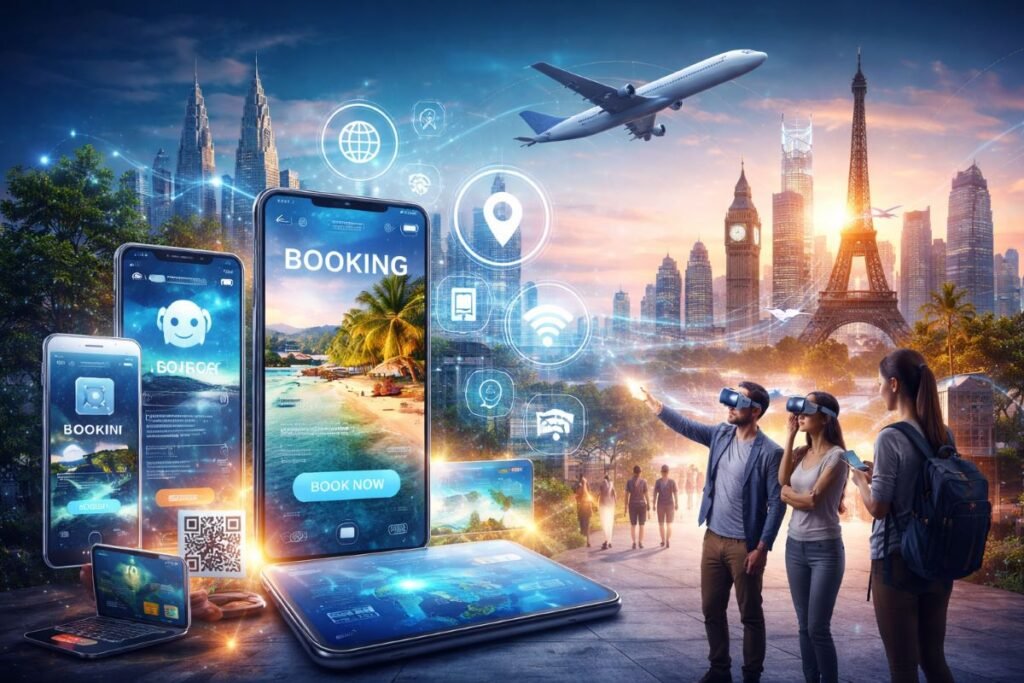
Popular AI Travel Tools in 2026
Several platforms are dominating the AI travel space.
AI Itinerary Generators
These tools automatically create personalized schedules.
AI Flight Search Engines
These predict prices and recommend booking strategies.
AI Chat Travel Assistants
Conversational AI tools answer travel questions instantly.
AI Hotel Match Platforms
These match travelers with ideal accommodations.
How Machine Learning Improves Travel Recommendations
Machine learning allows systems to improve continuously.
The more users interact with an AI travel planner, the better it understands:
- User behavior
- Preferences
- Spending habits
- Travel style
This creates increasingly accurate recommendations over time.
The Role of Big Data in AI Travel Planning
Travel AI depends heavily on massive data collection.
Data sources include:
- Flight prices
- Hotel occupancy
- Reviews
- Weather patterns
- Tourism trends
- Social media activity
By analyzing this data, AI identifies optimal travel opportunities.
Natural Language Processing in Travel
Modern AI travel systems use conversational interfaces.
Users can type:
“I want a relaxing beach vacation in Southeast Asia under $1500.”
The AI interprets:
- Budget
- Mood
- Region
- Travel intent
This makes travel planning more intuitive.
AI Travel Planner vs Traditional Travel Agents
Advantages of AI
Faster Planning
AI works instantly.
24/7 Availability
No office hours.
Data-Driven Recommendations
AI analyzes huge datasets.
Cost Efficiency
Lower operational costs often mean cheaper recommendations.
Advantages of Human Travel Agents
Human agents still excel in:
- Luxury concierge services
- Emergency support
- Complex custom arrangements
- Emotional understanding
Many experts believe the future combines both AI and human expertise.
Challenges of AI Travel Planning
Data Privacy Concerns
AI systems collect significant personal data.
Travelers should evaluate:
- Data security
- Privacy policies
- Third-party sharing
Over-Reliance on Automation
AI recommendations are useful, but travelers should still:
- Verify information
- Research independently
- Maintain flexibility
Lack of Human Intuition
AI may struggle with:
- Emotional nuances
- Cultural subtleties
- Unexpected travel disruptions
AI and Sustainable Tourism
AI is also supporting environmentally responsible travel.
An AI travel planner can:
- Recommend eco-friendly hotels
- Suggest low-carbon transportation
- Reduce overtourism
- Promote local businesses
This helps travelers make more sustainable choices.
AI in Flight Booking
AI systems now optimize:
- Layovers
- Ticket combinations
- Dynamic pricing
- Flexible date searches
This often results in significant savings.
AI and Personalized Recommendations
Recommendation engines analyze:
- Reviews
- Behavior patterns
- Similar traveler profiles
This creates highly customized suggestions.
For example:
- Adventure travelers receive hiking recommendations
- Food lovers receive restaurant-focused itineraries
- History enthusiasts receive museum-heavy schedules
How AI Helps During the Trip
Travel planning no longer ends after booking.
Modern AI assistants support travelers during trips through:
- Navigation
- Translation
- Emergency alerts
- Restaurant reservations
- Local recommendations
Voice AI and Travel
Voice assistants are becoming increasingly important in travel planning.
Users can now say:
“Find me a 5-day Italy itinerary focused on wine and food.”
Voice-enabled AI systems respond conversationally.
AI and Predictive Travel Analytics
Predictive AI helps travelers anticipate:

- Crowds
- Weather disruptions
- Price increases
- Traffic congestion
This improves decision-making.
AI Travel Planner for International Travel
International travel often involves:
- Visas
- Currency conversion
- Language barriers
- Transportation complexity
AI tools simplify these processes significantly.
The Future of AI Travel Planning
The future of travel planning will likely include:
Hyper-Personalized Trips
Every itinerary uniquely tailored.
Real-Time Adaptive Itineraries
Schedules changing dynamically based on:
- Weather
- Crowds
- Delays
- User mood
AI-Powered Virtual Travel Agents
Conversational assistants acting like personal concierges.
Augmented Reality Integration
AI-guided city exploration through smart glasses.
Autonomous Travel Booking
AI automatically booking optimal deals.
How Travelers Can Use AI More Effectively
To maximize benefits:
- Provide clear preferences
- Compare recommendations
- Verify important details
- Use multiple tools
- Stay flexible
Best Practices for Travel Content Creators
Travel bloggers and tourism businesses can also benefit from AI tools.
AI helps with:
- Keyword research
- Itinerary generation
- SEO optimization
- Content planning
- Audience targeting
Why AI Travel Planner Searches Are Growing Rapidly
Search demand is exploding because travelers want:
- Convenience
- Personalization
- Speed
- Savings
- Better experiences
As AI technology improves, adoption will continue rising globally.
The phrase AI travel planner has become one of the fastest-growing travel-related search keywords because it aligns with changing traveler expectations.
Common Mistakes Travelers Make with AI Travel Planning
Blindly Trusting AI
Always verify critical details.
Overpacking Itineraries
AI may suggest too many activities.
Ignoring Local Advice
Human recommendations still matter.
Not Considering Travel Fatigue
Efficient routes are important.
The Psychology Behind AI Travel Recommendations
AI systems increasingly understand traveler psychology.
They analyze:
- Emotional preferences
- Behavioral patterns
- Decision-making habits
This improves recommendation relevance.
Ethical Considerations of AI in Travel
As AI expands, ethical concerns include:
- Data ownership
- Algorithm bias
- Tourism saturation
- Job displacement
Responsible development is essential.
Will AI Replace Travel Agents?
Probably not entirely.
Instead, AI will likely:
- Automate repetitive tasks
- Improve efficiency
- Enhance personalization
Human expertise will remain valuable for:
- Complex luxury travel
- Crisis management
- Emotional reassurance
How Businesses Are Using AI Travel Technology
Hotels, airlines, and tourism companies now use AI for:
- Customer service chatbots
- Personalized marketing
- Dynamic pricing
- Demand forecasting
- Fraud detection
AI and Smart Tourism Cities
Many cities are integrating AI into tourism infrastructure.
Examples include:
- Smart transportation systems
- Crowd management
- AI-powered tourism information
- Predictive traffic analysis
The Economic Impact of AI in Travel
The AI tourism market is projected to grow significantly over the next decade.
Benefits include:
- Increased efficiency
- Higher traveler satisfaction
- Improved business profitability
- Better resource management
Conclusion
Artificial intelligence is fundamentally reshaping the travel experience. The modern AI travel planner is no longer a futuristic concept — it is an essential tool for millions of travelers worldwide.
By combining personalization, automation, predictive analytics, and real-time support, AI helps travelers save time, reduce stress, optimize budgets, and discover more meaningful experiences.
Whether someone is planning a solo backpacking adventure, a luxury honeymoon, a family vacation, or a digital nomad journey, AI-powered travel tools are making travel more accessible and intelligent than ever before.
As technology evolves, the capabilities of AI travel planning will only become more advanced. Travelers who embrace these tools early will likely enjoy smoother, smarter, and more rewarding journeys in the years ahead.
The future of travel is personalized, data-driven, and increasingly powered by artificial intelligence.
And at the center of that transformation is the growing influence of the AI travel planner.
Frequently Asked Questions (FAQ)
What is an AI travel planner?
An AI travel planner is a digital tool that uses artificial intelligence to create personalized travel itineraries, recommend destinations, optimize budgets, and simplify trip planning.
Are AI travel planners free?
Many AI travel planners offer free versions, although premium features may require subscriptions.
Can AI plan an entire vacation?
Yes. Modern AI systems can recommend flights, hotels, activities, restaurants, transportation, and daily itineraries.
Is AI travel planning accurate?
AI recommendations are generally accurate, but travelers should verify critical details like visas, schedules, and pricing.
What are the benefits of using an AI travel planner?
Benefits include:
- Faster planning
- Personalized recommendations
- Budget optimization
- Reduced stress
- Better itinerary organization
Can AI help find cheap flights?
Yes. Many AI systems analyze airfare trends and predict the best booking times.
Is AI replacing travel agents?
AI is automating many travel planning tasks, but human travel agents still provide valuable expertise for complex or luxury travel.
What is the best AI travel planner?
The best tool depends on travel style, budget, and preferences. Popular options include AI itinerary generators, conversational travel assistants, and predictive booking platforms.
Can AI help during the trip?
Yes. AI tools provide navigation, translation, recommendations, emergency alerts, and real-time updates.
Is AI travel planning safe?
Most platforms are safe, but travelers should review privacy settings and data policies before sharing personal information.








What's Your Reaction?