
Even the smallest act of defiance can become a career-ending mistake in the film industry, where entrenched power structures rarely show patience toward those unwilling to conform. Vineeth Madhavan (Naslen), the aspiring filmmaker at the center of Mollywood Times, refuses to bend. Determined to make his debut feature entirely on his own terms, he pursues a vision of cinema that he hopes will outlive him and be remembered forever. As his journey unfolds, however, his outlook gradually shifts, transforming from youthful optimism into deep-rooted cynicism.
Almost every scene pulses with the frustration, bitterness, and helplessness of a man watching his lifelong dream drift further and further away through circumstances beyond his control. The intensity of that anger is so convincing that one cannot help but speculate how much of the narrative draws from the personal experiences of the film’s director, Abhinav Sunder Nayak.
Whether autobiographical or not, the sharp cynicism that defined his remarkable debut feature, Mukundan Unni Associates, is unmistakably present here as well.
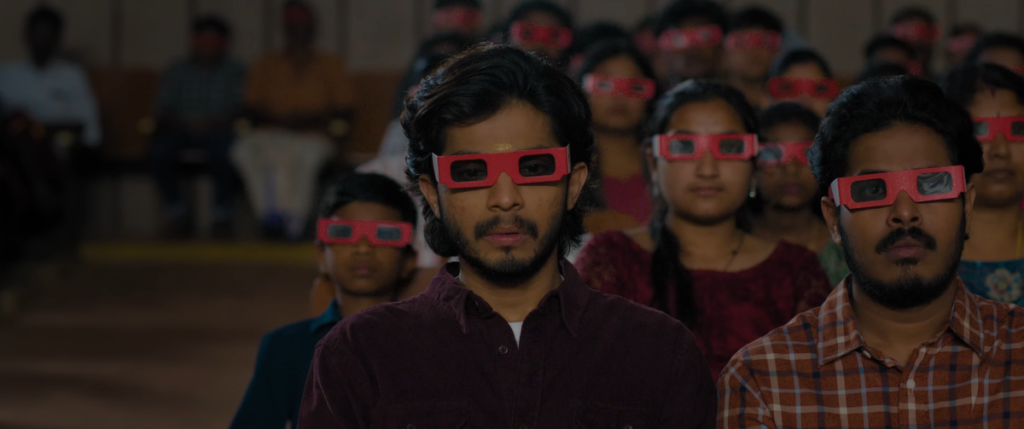
The world depicted in Mollywood Times is one governed by artificial smiles, hidden agendas, personal gain, and calculated manipulation. Within this environment, Vineeth emerges as a largely solitary figure fighting for artistic integrity, his passion for filmmaking bordering on self-destruction. The screenplay conveniently constructs a universe in which virtually everyone around him is either unreliable or self-serving, leaving him with few, if any, allies.
Also Read: Banda Movie Review
At times, however, Vineeth himself projects a subtle sense of superiority. This becomes particularly evident in scenes involving established filmmakers, who are portrayed as flaunting their success despite being depicted as creatively mediocre. The film often frames Vineeth as someone who sees himself standing apart from a system he considers artistically bankrupt.
Although his struggles within a ruthless and highly competitive industry naturally encourage the audience to sympathize with him, Vineeth also bears a striking resemblance to Howard Roark, the controversial protagonist of Ayn Rand’s The Fountainhead. Much like Roark, Vineeth is defined by an uncompromising devotion to his ideals and an obsessive refusal to accommodate outside influences. Just as Roark famously destroys a building that deviates from his architectural vision, Vineeth takes the extraordinary step of deleting a film he himself created.
In his understanding of cinema, filmmaking is fundamentally an individualistic endeavor. This perspective is reflected in several lines of dialogue where he minimizes the contributions of nearly everyone involved in the filmmaking process, elevating only the writer-director while dismissing the collaborative efforts of the rest of the crew.
There are also certain ideas embedded within the narrative that feel at odds with the broader themes the film seeks to explore.
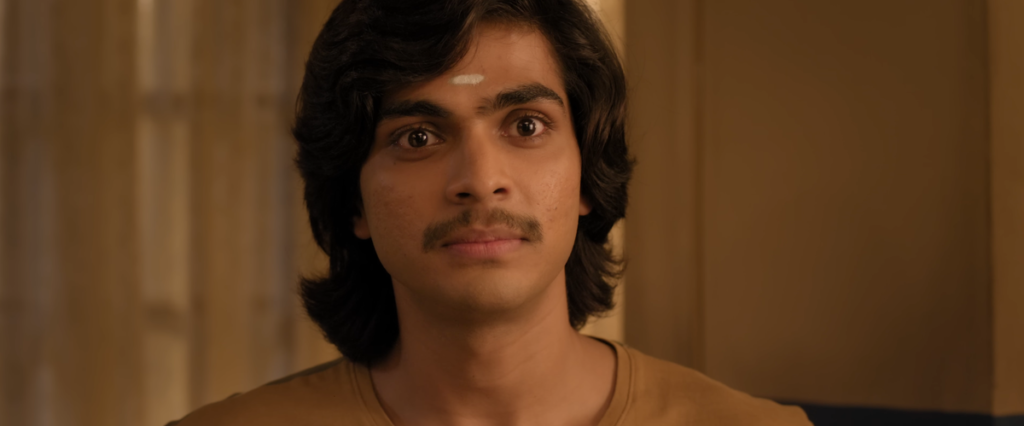
One particularly questionable moment involves the protagonist suggesting that some filmmakers receive acclaim despite producing mediocre work simply because they come from marginalized or underprivileged backgrounds. It is an unfortunate assertion, especially in an industry where individuals from such backgrounds remain significantly underrepresented and face enormous barriers to entry.

These problematic elements threaten to overshadow many of the film’s genuinely effective moments. Among its strengths are the touching depictions of Vineeth’s childhood fascination with cinema and the convincing portrayal of his ambition to become a horror filmmaker capable of genuinely frightening audiences. The film also offers several compelling glimpses into the darker realities of the entertainment industry.
One especially memorable sequence details how certain producers knowingly finance commercially unsuccessful films as a means of manipulating tax structures, providing a fascinating look at the business side of cinema. The fictionalized retelling of industry gossip and insider stories is likely to resonate with many viewers familiar with such narratives, prompting knowing nods from some while making others noticeably uncomfortable.
Abhinav once again relies heavily on voice-over narration, much as he did in Mukundan Unni Associates. However, the technique proves only partially successful this time around. While several sequences benefit from sharp and effective editing, the fact that the filmmaker also serves as one of the editors may have contributed to a lack of restraint in the final cut. There are stretches of the film that could have benefited from tighter trimming.
This issue becomes particularly noticeable in the latter half, where the narrative begins to feel repetitive and drawn out, creating the sensation of being trapped in a cycle of recurring ideas and situations. A more concise version of the film, coupled with stronger writing in its concluding act, might have delivered a much more lasting and impactful experience.
Promoted as a “hate letter to cinema,” Mollywood Times ultimately feels better suited to functioning as a revealing exposé of the film industry’s darker mechanisms and hidden realities. Yet the prolonged passages and excessive runtime prevent it from fully realizing that potential, leaving behind a work that is insightful and provocative but also undeniably bloated.